

Rodents can cause serious damage to wiring, insulation, and storage areas. Here's how to find their entry points, seal them out, and protect your rig all year long.
If you've ever opened up your RV after a few weeks in storage and found chewed wiring, droppings, or a nest tucked into a cabinet, you know how frustrating a rodent problem can be. Mice and rats don't need much of an opening to get inside, and once they're in, they can cause real damage to insulation, electrical systems, and stored belongings.
The good news is that most rodent problems are preventable. With the right materials, a little time spent inspecting your rig, and a few smart storage habits, you can keep your RV pest-free whether it's on the road or sitting in storage for the season.
In this article:
- Why RVs are particularly vulnerable to rodent entry
- Typical entry points to inspect and seal
- Practical methods for sealing entry points
- Storage practices to avoid attracting rodents
Why RVs Are Particularly Vulnerable
RVs offer rodents exactly what they're looking for: warmth, shelter from the elements, soft nesting materials, and often a food source. Unlike a house, an RV has dozens of small gaps and penetrations built into its structure, and many of these are easy to overlook during a routine inspection.
Slide-outs, plumbing penetrations, undercarriage openings, and the gaps around electrical conduits all create potential entry points. Even a gap the size of a dime is large enough for a young mouse to squeeze through. When an RV sits unused for weeks or months, rodents have all the time they need to explore and move in.

Common Entry Points to Inspect and Seal
Before applying any deterrent products, start with a thorough inspection. Walk around and underneath your RV looking for any gap, crack, or opening larger than a quarter inch. Pay close attention to these areas:
Plumbing Penetrations
Anywhere a water line, drain hose, or utility connection passes through the floor or wall of your RV is a potential entry point. These gaps are often left unsealed or were sealed with a material that has since deteriorated. Check under sinks, around the water heater connection, and where fresh and grey water lines enter the coach.
Slide-Out Seals
The rubber wiper seals on your slide-outs keep water out when the slides are retracted, but they can wear, tear, or sag over time. Damaged slide-out seals create a gap that runs the full height of the slide room on one or more sides. Inspect the seals closely when the slides are fully in, and replace any sections that appear cracked, flattened, or pulled away from the wall.
Undercarriage Openings
The underside of your RV is where most rodent entry happens. Wheel wells, belly pan gaps, vented access panels, and openings around the chassis frame are all common access points. If your unit has an enclosed underbelly, check for any tears or punctures in the material.
Vents, Exhausts, and Other Openings
Furnace vents, refrigerator exhaust openings, and holding tank vents that exit through the sidewall or floor can all provide entry if the screens or covers are damaged. Check each one and replace any that are cracked or missing their mesh screen insert.
Top tip: Walk the full perimeter and undercarriage before purchasing materials. A simple flashlight and a notepad to mark problem areas will save you trips back to the parts counter.
Practical Methods for Sealing Entry Points

Once you've identified your gaps, you have a few reliable options for closing them. The right choice depends on the size and location of the opening.
Steel Wool
For small gaps and holes, steel wool is one of the most effective blocking materials available. Rodents won't chew through it the way they will through foam or caulk. Stuff it tightly into any gap smaller than about two inches, then follow up with a sealant over the top to hold it in place and keep moisture out. Coarse-grade steel wool works best for this purpose.
Expanding Foam
Gaps around plumbing penetrations and wire runs are good candidates for expanding foam sealant. It fills irregular shapes well and adheres to most surfaces. Keep in mind that foam alone will not stop a determined rodent, so pair it with steel wool for any opening that isn't behind a hard surface. Use a foam rated for pest control, as some formulations include a deterrent compound.
Caulk and Sealants
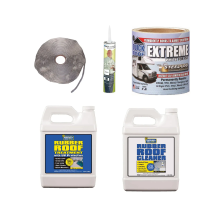
For smaller cracks along seams, around trim, and in joints between panels, a flexible RV-rated sealant or self-leveling lap sealant works well. These are also useful for resealing around roof vents and entry door frames where gaps can develop over time. Look for products designed for exterior RV use, since standard house caulks may not hold up to the temperature changes and constant movement an RV experiences on the road.
Hardware Cloth and Vent Covers
For larger openings that need airflow, such as undercarriage vents and furnace exhaust covers, use 1/4-inch hardware cloths to screen the opening. Cut it to size, secure it with screws or staples, and seal the edges. Replacement vent covers with built-in mesh screens are also available for many standard RV vents.
Storage Practices To Avoid Attracting Mice & Rats

How and where you store your RV, and what you leave inside, has a significant impact on whether rodents move in. A few simple habits go a long way.
Remove Food Completely
Any food left in the RV is an invitation. This includes items in sealed packages, since mice can chew through cardboard, foil, and thin plastic. Before long-term storage, remove all food from cabinets, pantry areas, and the refrigerator. Wipe down counters and cabinet interiors to remove crumbs and food odors.
Watch the Small Things
It's not just obvious food sources that attract rodents. Dog food, bird seed, soap bars, candles, and even some paper products can draw mice in. Go through your storage areas and remove or re-seal anything that might be appealing.
Clear the Area Around the RV
If your RV is stored on your property, keep the area around it clear of debris, wood piles, leaf piles, and overgrown vegetation. These provide ideal nesting habitat and make it easy for rodents to move from the ground into the undercarriage undetected.
Use Rodent-Resistant Storage Containers
For any supplies you do keep in the RV during storage, use hard-sided plastic bins with tight-fitting lids. Soft-sided bags and cardboard boxes won't stop a mouse.
Stay Ahead of the Problem
Staying ahead of rodent problems doesn't require a major time investment. A thorough inspection once or twice a year, combined with good storage habits, will go a long way toward protecting your rig and keeping it ready for your next trip.

Comentarios (0)
No hay comentarios todavía. Sé el primero en comentar.